Showing posts with label Habits. Show all posts

Monday, July 12, 2010

Hard Habit to Break

When I was little, I had a few bad habits which drove my parents up the wall. Some, they managed to curb. One habit, however, still remained till today. 

The habit which they managed to stop was thumb-sucking. Yes, I was a thumb-sucker for goodness-knows-how-long. I sucked my thumb to sleep and whenever I was not doing anything -- which was most of the time at a young age of 3 - 5, maybe? I don't remember.. I sucked till my thumb was misshapen, pale and wrinkly like a prune.  I guess it got so bad that they had to 'force' me to stop by rubbing foul-smelling ointment on my thumb.

The other habit which I retained till today is 'cracking' my ankles, just like how you crack your knuckles. I could crack both ankles like castanets. One after the other. My mum used to scold  me and cane my legs to make me stop. She said it's not good for my ankle joints and I'll suffer when I'm old one day. Didn't work though...still cracking although I'm minimizing the damage by focusing more on my right ankle now.

Fast forward to today, I'm now a mummy with a little girl of my own who...... bites and chews her nails!!!! And it drives ME up the wall!! (Retribution?)

Does your child have a bad habit? How do you stop that bad habit?
There's a whole list of annoying/bad habits kids may somehow pick up:
1) Nose picking
2) Head banging/rolling
3) Body rocking
4) Teeth grinding @ bruxism
5) Hair twirling/pulling
6) Facial tics e.g. blinking eyes
7) Masturbation
8) Breath holding
9) Others


How can I break my child's bad habit? 
  • First try ignoring it as the child may outgrow it him/herself.
  • Praise your child for good behavior. 
  • It may be nearly impossible to stop the bad habit until the child becomes interested in stopping. 
  • Start by focusing on one or two bothersome/harmful habits instead of too many at one time.
  • Try to figure out what may be making your child stressed.
  • Let your child make decisions whenever possible, by giving them acceptable choices.   
  • Redirect your child and help them find a better place, or better way to do what they are trying to do e.g. use tissue instead of picking nose, or do it in the bathroom and wash hands afterward.
  • Use natural or logical consequences for problem behavior. The purpose here is to get kids to make the right decision, not to bend them to your will. Be patient—it may take time for you to see results.
  • Be firm and kind.

Some habits are only annoying but harmless e.g. hair twirling. But some may be a symptom of a developmental condition (e.g. one of the signs of autism includes rocking of body back and forth) or psychological issues e.g. insecure, fearful of something, stress..etc. Others may cause problems instead e.g. teeth grinding may cause dental problems or disorder of jaw joint.

So mamas, please share if you have experienced this before with your child and how did you manage to get him/her to stop that habit. For me, I tried positive reinforcement i.e. praising her when she doesn't bite her nails. So far, that seems to work although it is still too soon to tell if it has permanently stopped.


Carpe Diem, ladies!
Becky

Wednesday, June 2, 2010

Sleep Training III - Ferberization

Method: Ferberization/Cry it Out/"Graduated Extinction"

Expert:
- Dr. Richard Ferber
- the Director of The Center for Pediatric Sleep Disorders
- Author of Solve Your Child's Sleep Problems, published in 1985, updated in 2006
(The above site provides the facts and myths of the method including a brief explanation about what's updated in the 2006 edition of his book.. Apparently, he's 'warmer and more relaxed' as well as more open to different approaches)


How to: 
 For babies at least 6 months old:

1) Take steps to prepare the baby to sleep. This includes night-time rituals and day-time activities.

2) At bedtime, leave the child in bed and leave the room.

3) Return at progressively increasing intervals to comfort the baby (without picking him up). For example, on the first night, some scenarios call for returning first after three minutes, then after five minutes, and thereafter each ten minutes, until the baby is asleep.

4) Each subsequent night, return at intervals longer than the night before. For example, the second night may call for returning first after five minutes, then after ten minutes, and thereafter each twelve minutes, until the baby is asleep.

5) If baby vomits or defecates, clean him/her up in a matter-of-fact manner, put him/her back and leave the room again so as not to deviate from the training.

Ferber made some modifications in the 2006 edition of his book Solve Your Child's Sleep Problems. He is now more open to co-sleeping and feels different approaches work for different families/children.  
Pros-Cons/Testimonials
 Pros:
1) Kids who complete training are less likely to throw bedtime tantrums
2) Kids who complete training are more likely to settle down at night within ten minutes
3) Kids who complete training are less likely to awaken their parents during the night
4) Parents who complete training report improvements in their own stress levels, mood, and interactions with their children

Cons:
1) Insufficient studies to measure the long term effects on children's:
• physiological stress response
• attachment relationship with parents
• emotional development
• personality development, or
• expression of physical affection

2) Not appropriate for children with a conditioned fear of being left alone as well as children with conditioned vomiting response
3) The method is not designed to treat most sleep problems that cause night wakings e.g.nighttime fears and separation anxiety , daytime stress,  nightmares , snoring and other forms of sleep-disordered breathing , nocturnal headaches and other painful medical conditions, circadian rhythm sleep disorders,  sleep walking and/or night-terrors ..etc

More: Ferber method and its alternatives 
           AskBaby.com
           Attachment Parenting vs. Ferber Method

Personal opinion: This method was already 'popularized' through tv shows like "Mad About You" and movies like "Meet the Fockers 2", to name a few.  A friend whose sister used this method told me that as the baby cried inside the room, the parents were crying outside! From what I read in the sites, it seems that his 1985 edition of his methods were more rigid and his updated version in 2006 is more relaxed as well as open to different approaches. Personally, I am not in favour of leaving my baby alone in a room to self-soothe or cry herself to sleep. As some of the sites suggest, there are alternatives to this method which are less distressing! The above site: 'Ferber method and its alternatives' gives a very comprehensive view of this method so check it out!

Carpe Diem, ladies!
Becky

Sunday, May 30, 2010

Sleep Training II - The Baby Sleep Site

Method: The Baby Sleep Site


Expert: 
- Nicole Johnson
- 35 years old, married mother of two boys
- B.A degree from UC Berkeley, MBA from Ohio State University
- President of Babble Soft
- Baby sleep coach and owner of The Baby Sleep Site™
- In her own words, "By thoroughly researching the key literature and scientific reports, I became an expert in sleep methods, scheduling routines, baby’s development needs and more."
- More: About The Baby Sleep Site 


How To: 5 Ways to Help Your Child Sleep Through The Night
More: BabySleepSite_Five Way to STTN.pdf, 
The Baby Sleep Site

1) Sleep Routines
- "...nap and bedtime routines will cue your child that sleep is near and sets his/her expectations. When done right, your child might start to get sleepy and eyes droopy before you even get to Step 2." 
- A typical bedtime routine: Diaper and pyjamas, a quiet game, nursing/bottle/sippie (for babies younger than 1 or 2), brushing teeth, potty (if applicable), book, singing or cuddling, then lights out.
- Naptime routine similar to bedtime routine but shorter (10 mins)
- Bath not included because: a) Some parents do not have the time b) Child may have dry skin, water dries out the skin even more c) A bath may rile up some more spirited children
- " Whatever your specific routine is, the steps are unimportant. It is only your consistency that makes your routines successful or not.."

2) Early Bedtime
- "...the most misunderstood fact when it comes to a baby's sleep is the idea that you should keep your baby up longer to get more sleep out of her. This does not promote more sleep. In fact, many times it creates less."
- "The problem with a too-late bedtime is your child will get overtired. When we are overtired (adults included), our bodies will release hormones to fight fatigue. This makes it hard for us to settle down and relax and sleep well. This is especially true for your baby..."
- "The second part of the problem is that babies biologically tend to be early risers in the early days...they want to explore! ..one day, he will be a teenager and you will have to drag him out of bed. But for now, this means that regardless of bedtime, you may not get to sleep in like you did before you had kids."
Amount of sleep:
- Babies younger one year and younger : 11 - 12 hours each night
- Toddlers 2 - 3 years old: 10 - 11 hours each night
- The key to choosing the right bedtime is dependent on the time the last nap ends and to make sure it's not too long until bedtime...
- Recommended bedtime:  
Babies 6 months and younger: between 6 & 7 pm
Toddlers until 18 months old: between 6 & 8 pm


3) Naps
- "...the better baby naps during the day, the better night sleep can be.."
- "It is normal for babies younger than 6 months old to take 3 - 4 short 30 - 45 minute catnaps." 
- " The average amount of napping is 2 - 3 hours each day for this age group." 
- " Around 6 months of age (some ready by 5 months, some won't) , you should nap your baby more on a schedule. A typical schedule might be: 7am(wake), 9am(nap), 1pm(nap), 4pm(nap), 7pm(bed). The third nap is optional and most babies lose it by 9 months old.

4) Manage Sleep Associations 
-" Is it a bad idea to rock your baby? Can it be harmful to your baby?...it is never a bad idea to cuddle your baby and give her lots of love and affection! It's only when rocking your baby becomes a task difficult to sustain is it a problem."
- "They (babies) might fall asleep .. in their parents' arms/nursing/sucking on a bottle/pacifier.. there isn't a problem with these methods until it is a problem."  
- The problem with sleep associations is that your baby needs YOU to recreate the environment in which they fall asleep.. 
- "Sleep association is NOT a problem...it's only when you can't keep up with the sleep associations that it becomes a problem. 
- The key is to break the sleep associations causing problems...the longer you wait, the harder it is for him to sleep well."  

5) Manage Night Feedings
 Night feeding: " I personally believe that babies vary and so will answer to the question.."
- " My philosophy is to sleep train to fix problems, but not make a child go hungry if they can't  comfortably go all night without nutrition."
- After 3 months old:
" For optimum sleep at night, choose zero, one or two times to feed your child and don't at any other time in the night. You are choosing the number of times based on what YOU know about your child. The theory behind this is that you are helping your child feel hungry at appropriate times at night." [consult your paediatrician]


Pros/Cons - Testimonials


Here is the link to the Testimonials: 
(As it's from the site itself, of course all the comments praise the method above. I can't seem to find any other info about the site from Google. Maybe because it's rather new? It was set up in 2009, based on the Copyright..) 

Concept-wise, it seems reasonable. The only cons about this method is perhaps the really early recommended bedtime which may not be practical for most people who are not necessarily home bound at that time. 

Has anyone tried this method--maybe you can share the pros-cons?

Personal opinion: I have a question: How does one become an 'expert' after "..thoroughly researching the key literature and scientific reports"? Anyhow, I think the principles of this method are reasonable and makes sense. I like that she takes into consideration all babies are different, and that she emphasizes on the consistency of the steps and not just the steps itself. I think it's also true that an over tired baby has difficulty settling down. We went out just now and came  back later than expected. My baby was soooo sleepy and slept in the car seat. But after gently putting her down on the mattress, she suddenly woke up and started playing again.. It was an hour later before she dozed off! So I suppose her hormones are fighting the fatigue? Only, which hormones? Endorphins? Adrenaline? Doctors, please enlighten us.Thanks!

Carpe Diem, ladies!
Becky

Friday, May 28, 2010

Sleep Training I - Sears

Method : Sears - Attachment Parenting

Expert(s) : 
William Sears, M.D and Martha Sears, R.N. with Robert Sears, M.D. and James Sears, M.D
- William and Martha Sears have 8 children
- Dr. Sears was trained at Harvard Medical School's Children's Hospital, Boston and Toronto's Hospital for Sick Children, Associate Clinical Professor of Pediatrics at the University of California, Irvine. Practiced Pediatrics for more than 30 years
- Martha Sears is a Registered Nurse, works as parenting and breastfeeding consultant in the Sears Family Pediatric Practice
-Robert Sears, M.D., a board certified pediatrician, degree from Georgetown Uni and trained in Children's Hospital LA.
- James Sears, M.D. a board certified pediatrician, degree from St. Louis Uni. Medical School, trained in Tod's Children's Hospital in Youngstown, Ohio.
More info: William Sears (Wiki.)  ,  AskDrSears  , Dr. Sears Official Website

How To Get Your Baby to Sleep [pg. 312, Chapter 15, The Baby Book]

A) Step One: Give your Baby the Best Sleep Start

* Develop a Nighttime-Parenting Mind-Set
"The nighttime mind-set we want to steer you away from is that getting your baby to sleep through the night requires a list of gadgets and insensitive techniques that 'break' baby of night waking. This is a short term gain and possibly a long term loss. In breaking baby's night waking, you may also break other, more fragile connections with your baby."
- "Do you look at night as a time of relief from the constant attachment of baby during the day?"
-"Is 'sleeping through the night' at the top of your parent-achievement list?"
-"And if you are not rewarded with a perfect sleeper, have you failed Parenting 101?"
If you answer 'Yes' to the three questions, consider another approach.......

* Develop a Nighttime-Parenting Style that Works for You
"Because babies have varied temperaments, and families have varied life-styles, there is no right way to get a baby to sleep - only the right attitude about sleep."
"Good sleepers are partly born, party made, never forced."
- "Be open to trying different nighttime approaches to see which one fits the sleep temperament of your baby and your life-style and sleep habits."

* The Attachment Style of Nighttime Parenting
"The approach ...that usually works for most families is the attachment style of nighttime parenting."
"The two elements of this style are (1) organizing and mellowing your baby's temperament during the day (2) sleeping close to your baby at night."
How: Feeding on demand/cue promotes better sleep at night, wear baby during the day, sharing sleep with baby highly recommended.

B) Step Two: Condition Your Baby to Sleep
"Your role is to set the conditions that make sleep attractive and to present cues that suggest to baby that sleep is expected."
"Which sleep tips work depends on your baby's temperament and stage of development. What doesn't work tonight may work next week."
"We omit.. 'harden your heart' method: 'Put your baby to down to sleep awake in a crib in her own room and let her cry herself to sleep so that she gets used to falling asleep by herself and won't always need to rely on you to get her back to sleep...."
- "We believe that in the first 6 months, this method is unwise; you run the risk of losing your baby's trust, you may become insensitive to your baby's cries, and in the case of infants with persistent personalities, it usually doesn't work.."
How: 
a) Make sure daytime is peaceful
b) Set consistent nap routines
c) Set consistent bedtimes
d) Enjoy predictable bedtime rituals - warm bath, rocking, nursing, lullabies - capitalize on patterns of association
e) Calm your baby down - A soothing massage or a warm bath
f) Wear your baby down - Wear baby in a sling, walk around till she sleeps, put her down with the sling as blanket.
g) Nurse your baby down - Breastfeed to sleep
h) Father  your baby down - Father nurse baby to sleep through 'neck nestle' technique
i) Rock your baby down
j) Create a bed on wheels - Drive baby in car seat till she/he falls asleep

C) Step Three : Lessen Conditions that Cause Night Waking
"While some night waking is inevitable and the result of the temperament and developmental stage of your baby, there are many causes of disturbed sleep over which you do have some control."
Physical Causes 
- Teething pain, Wet/Soiled Diapers, Irritating Sleepwear, Hunger, Stuffy Nose, Baby too hot or cold
Environmental Causes
-Fluctuating temperature and humidity, Airborne irritants, A cold bed, Unfamiliar sounds
Medical Causes
- Gastroesophageal reflux, Colds, Ear Infections, Fever, Allergies, Pinworms, Urinary tract infections..

Others:
Developmental Causes
-"Expect the previous steady sleeper to begin night waking while going through a major developmental milestone e.g. walking, sitting up alone, crawling..."
-"Separation anxiety is another developmental reason for night waking.

Emotional Causes
-"Expect more night waking when your family's usual routines are upset.."
-"Expect sleep disturbances when ..there's separation, divorce, family strife and hospitalization.."
- "If you and your baby have a close attachment, expect her to share your emotions. If you are upset,depressed, or wakeful yourself, expect similar emotional and sleep disturbances in your baby.."

Pros-Cons/Testimonials
Since I myself am pro-Sears method, I will give my two cents worth on the pros and cons.
Pros
- I don't have to go against my natural instincts when I respond to my baby's cries
- I enjoy the closeness with my babies
- I understand my children's sleep patterns better
- From observing my eldest daughter, she fared well, grew up to be independent and when she was 2 and a half years old, she happily slept in her own bed, own room
- Personally, I feel responding to my baby's cries at night reinforces their trust in me.

Cons
- It may be a bit tiring waking up at night.
- For those with office hours (8 - 5pm), disruption in sleep can affect work performance.
- Some of the steps are not practical e.g. driving baby around to sleep.
- Parents have to do more to put baby to sleep.
More:  
 
Personal Opinion: As I said, I am pro-attachment parenting. At the same time, I have provided links for those who feel differently just so we can see two sides of a coin. Some claim that it spoils the child, parents become too permissive so the children do what they want. I like it because this method of parenting takes into consideration babies'/ children's stage of development and emphasizes parent-child bonding. However, it doesn't mean I follow everything to the T. I am also a firm parent and I do not tolerate disrespect, ill-discipline, selfishness and rudeness. When necessary, I will mete out appropriate disciplinary actions based on the misbehaviour involved. Therefore, as I have said before and will continue saying, we as parents must know our own children and judge for ourselves what works/doesn't work. In everything, strike a healthy balance!

Carpe Diem, ladies!
Becky

Wednesday, May 26, 2010

Sleep Training Intro

Sometimes, I'm amused that something as natural as sleep needs training and consists of a variety of methods by different 'experts'. During our parents' time (20+ or 30 years ago?), the only method they knew of was the 'sarong' and the 'experts' were the grandmothers. Then again, sarong may not be for everyone. (Sarong Cradle-Good/Bad?)

Peaceful slumber...

Anyway, with parents' busy working lifestyle, not everyone can afford to wake up few times a night to put baby back to sleep so there are a few popular methods to help with this process. I  decided to compile 4 methods by 4 'experts' (I use inverted commas because it depends on who proclaims them as 'experts' -- others or themselves?) to put up tomorrow for all of us to mull over and see what works for you. As long as it doesn't endanger babies' well-being, I don't think there is a one-size-fits-all and I hope this doesn't become a 'my-way-better-than-your-way' debate. It's purely for sharing and discussion and if you know of other methods or literature/links, feel free to add on.

We'll go by 'Method/Expert/How to/Pros-Cons/Testimonials' and I may add my personal opinions here and there. Please share yours too!

Carpe Diem, ladies!
Becky

Tuesday, May 4, 2010

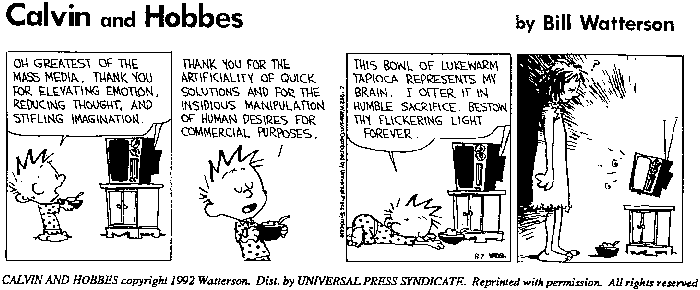
That Idiot Box

When I was growing up, I think I watched a lot of television. Too much television. It couldn't be helped at that time because with four children, no help, a big house, mountains of laundry to wash and 3 meals to cook (Everyday! None of this tapau-tapau business..), my mother needed all the babysitting help she could get.

The first time I was weaned off tv was when I went to university and stayed in the hostel for 2 years. Suddenly, there was a whole lot of time to do everything else EXCEPT watch tv. Don't get me wrong, I still watch tv every now and then... at my mother's house.... coz, I don't have a tv at home. (GASP!!)

No, I'm not Amish -- nor am I too broke to get one. Amusingly, some of my relatives very kindly offered to buy us a tv set or sell theirs to us at a super cheap price (Thanks anyway!).
The reason I postpone having a tv set at the moment is because:

a) I want my children to fill their time with other activities besides tv.
b) I would prefer my family to communicate more with each other and not with the square box.
c) Actually, with all the things needed to be done, there really isn't any time to watch tv! So interestingly enough, we don't feel like there's a void in our lives.
d) I read that watching too much tv for young children especially for children below 2 years old is not only not helpful but could set back their development.
 (I love Calvin and Hobbes. I don't own any of the above. Copyright belongs to the genius artist Bill Watterson)
Some mums asked me, what about educational DVDs for kids? Personally, while it may have its 'benefits', I think it's not very healthy nor helpful when children are passively glued to an object for more than an hour in one stretch. If a child were to stare at a ball for an hour without doing anything with it, would you be worried? Similarly, even though the DVDs may be marketed to 'improve babies' language development', if language is not applied and real, interactive communication is not practiced, how will babies'/children's language develop?


If we take time to just observe our kids when they watch tv, we would notice that their eyes glaze over, their mouths slightly ajar and they start to exhibit what I call the 'turtle-neck' syndrome-- their heads and necks protrude slightly forward from their hunched bodies. Oh, and they are suddenly oblivious to everything else around them.

However, as with most things, the good/bad depends again on balance. I acknowledge I picked up a lot of handy information and pronunciation of certain words from tv --- I also picked up a lot of bad language, aggression (I fought a lot with siblings -punches, slaps, kicks and all--when younger) and some things which I wished I never knew. 

For now, since childhood is fleeting and they grow up so quickly, I'd want them to do more than just sit in front of that idiot box.

Dear Mamas, to each his/her own, but what do you think?

Read also:

Carpe Diem, ladies!
Becky

P/S I happened to read this column in today's STAR (30/5/2010). It's one of those sad but true moments. From the mouth of a babe.

Wednesday, April 14, 2010

'Sarong' cradle-- Good/Bad?

 My little girl is now fast approaching 9 months old, and she refuses to sleep! She needs to be breastfed to sleep and once I leave her side, she would suddenly roll over and stand up again! So, she hardly naps in the morning and afternoon which makes me exhausted! Forget about personal time, forget about getting some paperwork done! The little Energizer bunny would come and rip my papers even though a minute ago, she seemed fast asleep.

One minute of peace and quiet.....
So, my mother keeps pestering me to get a 'sarong' saying that it's easier to put her to sleep and to keep her asleep.. I'm a bit apprehensive about that (although on bad days, I'm super tempted to buy one!).. Simply because of the horror stories I read e.g. check out links below:

Baby girl hits sarong cradle and suffers brain damage
Say 'NO' to sarong buaian
Accident Prevention- KKH website
Sleeping in a sarong

My mother swears by it....
As with most old people, when I protested,  my parents would say, "Hey, we brought you up in a 'sarong' and you turned out fine! What's the big deal?" (Em... Maybe my IQ could have been 20 points higher??)

Having said that, the fact is when you leave your child in another person's care, it's difficult to control everything e.g what can/can't be done. My mother says she can't carry my baby (like we do) the whole time as she's old and prone to joint pain.

Would you put your baby in a 'sarong' knowing there are some risks involved? What do you think and what would experienced mothers advise?

The contents of this blog are for informational purposes only. The content is not designed to be a substitute for professional medical consultation.