Showing posts with label Age: Newborn -12 months. Show all posts

Wednesday, November 10, 2010

Wine and Confinement -- To take or not to take?

Contribution by laifchan:

Was doing some reading about this issue and found 2 recent helpful articles written by Chinese researchers.


Here's a summary of my own thoughts and conclusions.


Out of the many traditions during confinement, taking red rice wine chicken soup is one that is held to dearly for a few reasons:
1. Its delicious :)
2. Claims of improving the mother's health ie prevents arthritis, balances the hot-cold thingy, improves strenght etc (not going to dispute it but lets just say so far no scientific evidence)


However, there have been countless research showing detrimental effects of alcohol on babies development (of course,  a limitation is that most studies don't track children's development into adulthood).


The question is,  does taking red rice wine chicken soup cause significant amounts of alcohol into breastmilk and cause negative effects in babies?


Well, anecdotally (meaning hearsay), Chinese women have been practicing these tradition for eons and have produced "bright" children who have grown up to be 'successful' adults. However, stories without examining the multiple factors that may influence how children turn out to be 'smart' may be misleading.


Also, there is a belief that the alcohol content in red rice wine chicken soup is negligible. This myth is challenged in 1 of the attached articles which showed that after less than 3 hrs after taking normal amounts of this soup, there IS still alcohol in the milk that can cause significant changes to the composition of breastmilk (less nutrients) and can decrease milk production.


Also, although Chinese women do breastfeed during confinement while taking red rice wine chicken soup, not many breastfeed exclusively but end up supplementing with formula milk even within the 1st mth, so the babies maybe less exposed to the negative consequences of alcohol.


Given the many proven benefits of exculsively breastfeeding for at least 6 mths ie better immunity in babies, what options do mothers have if they still want to take red rice wine soup while exclusively breastfeeding?


Well, I guess it should be done in moderation and breastfeeding timed to be at least 3 hrs after consumption of this soup.


For myself, a practical thing to do is:
1.limit any form of alcohol to just this soup (personal reasons coz i find it delicious, not for any health benefits, and don't like taking any other form of alcohol ie DOM etc)

2. Take it during dinner after i've expressed milk for my baby's night-feeds 

-this way, it would be at least a good 8 hrs before i nurse my baby after the soup and this will probably mitigate any effects of the alcohol
-couldn't do it for Jason as he seemed to be perpetually stuck to my breasts and left me no time to express, so I didn't take any soup, anyway he had jaundice so all the more reason not to take any alcohol (didn't want to overwork his tiny liver)
- another advantage of giving the baby expressed milk at night is somebody else (husbands/confnement lady) can help feed the baby while the mother is able to rest


Any other ideas or comments, people?


Thank you, laifchan!!!

Tuesday, July 6, 2010

Honey, Honey!

"When should we feed babies/toddlers honey?"


That question was brought up during a dinner with my girlfriends and we were a bit divided about it. One said, "2 years old!" One said "No, 1 year old" Another one remarked, "My friend fed her child honey since infancy."


  So, I checked the labels on some honey jars:

So why not for infants under the age of 12 months?
Because of the risk of infant botulism. 

Infant botulism is a type of food poisoning that can result in death caused by the growth of a poisonous bacteria known as clostridium botulinum in the gastrointestinal tract of babies. Botulinum spores can be found:
1) Widely throughout nature
2) Maple syrup
3) Corn syrup (commonly found in commercial infant formula!)
4) Dust
As it is so widespread, human beings have adapted to it and able to fend off small amounts of toxin.

However, infants do not have a matured digestive system and are susceptible to botulism poisoning. Parents are recommended to avoid it unless it is pasteurized (which makes it rare), as well as foods which may contain honey.

Symptoms of infant botulism:
1) Constipation
2) Muscle weakness - sign of nervous system damage
3) Infant cries weakly
4) Infant has difficulty feeding
5) Infant will have limp and floppy appearance
6) Infant will also look lethargic
More: What is Botulism?
          How to protect my baby from Infant Botulism?
          Honey and Infant Botulism- Fact Sheet on From Health Canada

However, one article I came across says otherwise:
Why Honey is a Healthy Food for Infants
Apparently, this article says that it is only heated honey which is dangerous. The high heat (over 96 degrees Fahrenheit) kills the live enzymes which is supposed to kill bacterial cells in the honey. The writer (Judie C. Snelson) then writes about the irony that parents allow babies to be vaccinated although vaccines contain known "carcinogenic substances, heavy metals, and have dangerous, predictable side effects". On top of that, cases of injury/death caused by vaccinations dwarfs cases of infant botulism caused by honey.

The benefits of honey are numerous:
1) Natural Sweetener
2) Energy Source
3) Aids weight loss
4) Improving athletic performance
5) Source of vitamins and minerals
6) Antibiotic and antifungal properties
7) Natural antiseptic
8) Aids skin care
          Amazing Benefits of Honey


What do you think? Are there any honey brands you know of that is so safe even for infants? (Maybe some new direct-selling product?) 
Personally, I prefer to just err on the side of caution and feed my child -when necessary- after the recommended age 1......or 2, to be even safer...

Wednesday, May 26, 2010

Sleep Training Intro

Sometimes, I'm amused that something as natural as sleep needs training and consists of a variety of methods by different 'experts'. During our parents' time (20+ or 30 years ago?), the only method they knew of was the 'sarong' and the 'experts' were the grandmothers. Then again, sarong may not be for everyone. (Sarong Cradle-Good/Bad?)

Peaceful slumber...

Anyway, with parents' busy working lifestyle, not everyone can afford to wake up few times a night to put baby back to sleep so there are a few popular methods to help with this process. I  decided to compile 4 methods by 4 'experts' (I use inverted commas because it depends on who proclaims them as 'experts' -- others or themselves?) to put up tomorrow for all of us to mull over and see what works for you. As long as it doesn't endanger babies' well-being, I don't think there is a one-size-fits-all and I hope this doesn't become a 'my-way-better-than-your-way' debate. It's purely for sharing and discussion and if you know of other methods or literature/links, feel free to add on.

We'll go by 'Method/Expert/How to/Pros-Cons/Testimonials' and I may add my personal opinions here and there. Please share yours too!

Carpe Diem, ladies!
Becky

Friday, April 30, 2010

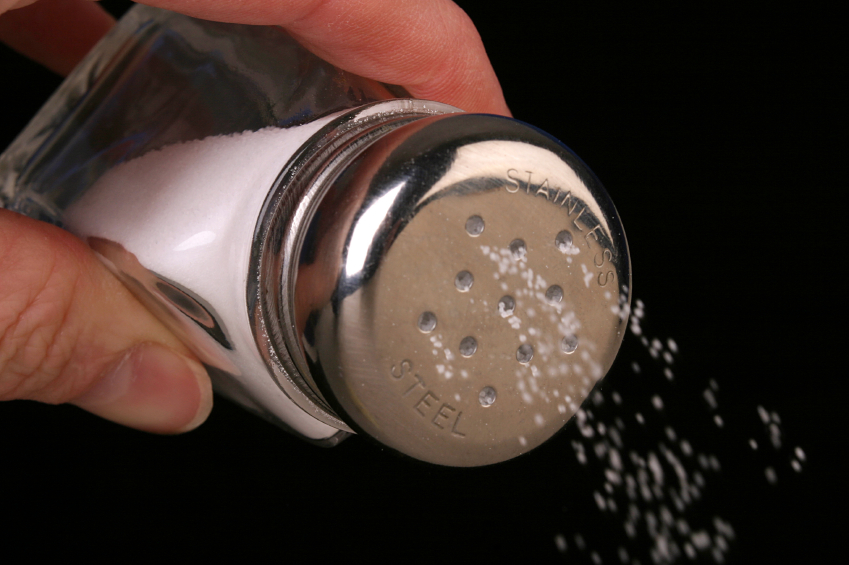
Hold the SALT!

I once met a mother who complained that her mother-in-law put salt in her baby's porridge. The grandmother's justification was, "How to eat if no taste!"

Recently, I read an article in The Star (Less salt, please) that feeding babies food with salt is actually dangerous for the babies and can cause kidney, brain and liver damage!!! Gasp!! 

While most of us may not put actual salt in our babies' food, I think we should also lay off Bovril, soya sauce or other processed foods that may contain salt. If the recommended amount of salt per day for adults is only a teaspoon, what with our matured kidneys and all, it's a good idea to not give any at all to babies whose kidneys are not mature to filter the salt content in food. 
Did you know that...
a) babies' salt requirement is less than 1g a day?
b) requirement is already met through breast milk or formula? (Now, I understand why they label milk formula according to age e.g. 0-6 months, 6-12 months, 1-3 yrs old..etc)
c) baby formula shouldn't be too concentrated as it contains sodium/salt?
d) toddlers aged 1-3 yrs need only 0.8g sodium per day?
e) 1g of sodium (usually on food labels) is equivalent to 2.55g salt?
f) we should choose food with sodium content of no more than 0.1g sodium per 100g?
g) saltiness is an acquired taste? (which means, we can actually make do without it..)

But don't take my word for it, read also:
Why Adding Salt to Baby Food May be harmful
BBC News/UK/Warning after Salt Kills Baby
Baby Food Tips - Do's and Don'ts
Cow & Gate, Farley's Rusks

Hmm... I might need to reconsider giving her cheese now, since some cheese are pretty salty! I wonder if we might be endangering our babies' health without knowing........? Go all natural, people!

Tuesday, April 27, 2010

Why Kids are just Kids Pt. 2

Besides children's physical development, their behaviour is also affected by the various stages of emotional development they are in. I think this takes LOTS of patience and understanding on the parents' part because unlike the physical aspect of our child, we can't 'see' their emotional maturity. And sometimes it's trickier when a child may be more physically developed but emotionally, they're still immature. Hence, sometimes we may find ourselves yelling, "You are already 6 years old! Why are you still behaving like a baby?"

More excerpts from my book...
I will only focus on the 1st three stages of Erikson's stages of Emotional Development as majority of us have younger kids. You can read more from the links below.

Children's Behaviour is affected by their Emotional Development

"We find Erikson's explanation of emotional development especially relevant to discipline issues. Understanding child behaviour in terms of the stages that Erikson describes can help us prevent discipline problems; this understanding can also guide intervention when problems do occur.... Theoretically, a child completes one stage and goes on to the next, but in actuality people seem to continue working on all previous stages as they proceed to the next.."

Trust vs. Mistrust (Birth - 18 months) [pg 27 & 28]
"About 50 years ago, parents were told that picking up babies when they cried would spoil them. Dutiful mothers and fathers fought their natural urges to respond to the cries of their infants. Instead, they attended to feeding and changing needs on a set schedule, to which the child was expected to conform. Remnants of this theory persists in American society today, threatening the healthy development of trust in infancy. Parents and caregivers need to know how important it is to respond to a baby's cries. Children's early efforts to communicate their needs deserve a response. Responsive adults are essential to a child's trust development.
- If a child's experiences lead to a lesson in mistrust rather than trust, that person's whole life can be affected.... Later in life, an inability to trust co-workers and the suspicion of spouses can undermine relationships. As relationships fail to withstand the pressure, a vicious cycle of self-fulfilling prophecy is perpetuated: ... they expect others to reject them, so they behave in ways that invite rejection."

Autonomy vs. Shame (18 months - 3 years old)[pg 29]
-Erikson's autonomy stage is the period when youngsters work at defining themselves as separate from the adults they have, until now, completely depended on...toddlers years are the time for development of autonomy..the toddlers suddenly begin to see that they are separate people, wih ideas and wills of their own. This period is known as the 'terrible twos' and can create serious discipline problems for the unwary adult. It doesn't necessarily disappear at age three, so beware. The formerly docile child suddenly says an emphatic 'NO!' to all your suggestions and tests the limits you set.

- (give children)..as many opportunities as possible to make decisions and choices. These opportunities not only help him feel proud of his independence, but they also help him cooperate during times when there is no choice. Children who routinely have a chance to exercise their personal power are more able to accept times when adults must make decisions. Conversely, children who don't get ample opportunity for making choices can be incredibly stubborn.
-When children do not develop emotional autonomy, they develop a sense of shame instead. Shame can be caused by their experiences with adults who don't understand what is happening when children assert themselves; these adults think that their job is to stamp out 'naughtiness'.. As a result, children develop feelings of shame about the natural urges of independence."

Initiative vs. Guilt (3 - 5 years old)[pg 31 & 32]
"Most preschool children are in this stage. You will see them further testing their individual powers and abilities. Their physical and intellectual abilities are increasing rapidly as they joyfully try out new skills..Developmental tasks now include the need to participate in real work"
[It is at this stage that my girl takes the initiative to create her own play situations. She asks a lot of 'why' questions and wants to participate in 'adult' work e.g. sweeping, wiping, vacuuming... Most times I let her do so, but when my 2nd one was born, things got a bit stressful. Once, the baby cried and she tried to help but I shoved her aside asking her not to touch the baby - I was afraid she might accidentally hurt the infant. She cried,not comprehending why when she wanted to help she was scolded instead (resulting in feelings of guilt that she didn't understand). My bad! Sometimes, we adults tend to hurry kids along and not let them take the initiative to do things e.g. pour juice, wash dishes.. When we were younger, adults would scold us 'kepo' when we tried to help; "Don't you be 'kepo'!" .]

Anyway, the point of my sharing the above info is to boost our understanding of why kids behave the way they do e.g. suddenly saying 'no' to everything, asking 'why' repeatedly, wanting to do things by themselves (sometimes causing a big MESS), sometimes clinging to us, sometimes pushing us away... hopefully, we understand that our kids are not being 'bad' or disobedient or 'naughty'... they're just, well, KIDS!

So dear mamas, do you think the above information is helpful in understanding your child better? Do you think it will help us to reconsider our choice of words and disciplinary actions? How does the above explain why WE (the adults) have become who we are today?

Check out also:
Who was Erik Erikson?
Stages of Social-Emotional Development in Children and Teenagers
Erik Erikson's Psychosocial Theory
Smart Love


Carpe Diem, ladies!
Becky

Sunday, April 18, 2010

Balancing Breastfeeding/Expressing with Work Pt. 3


laifchan:
So, you’re approaching the end of your maternity leave and wondering whether you can cope with breastfeeding while working from 9-5 at your office.
Yup, it’s possible, even if you have to travel outstation for a stretch-just ensure your freezer is well-stocked with milk.
Managed to survive a 3-day trip in Penang (with baby) and Sepang (without baby).

Things you’ll need:
Breast-pump.
There are many good brands in the market. I am using the electric Medela Pump-In-Style handed down from my cousin. I like it because its very efficient- just plug it into a power source and both sides are done simultaneously in 10-15mins. With practice, you can pump with one hand free to read magazines, surf the net etc…

Storage and sterilizing paraphernalia
Initially, I used glass milk bottles (Pigeon) solely and stored enough for 1 feed in each bottle for convenient warming-up and feeding.
I started to use pre-sterilized disposable zip-lock storage bags (Autumnz) when I ran out of bottles (supply exceeded demand).
At first, I lugged the big Coleman ice-box everywhere coz the small storage bag that came with the pump could only fit 4-ounce bottles upright and I was filling-up 6-7 ounces on the left side. Later, I got a bigger traveling storage bag that could fit six 8-ounce bottles.
Freezer (The mini-bars in hotels are usually not cold enough to store >24 hours. I had to ‘tumpang’ the resort/hotels kitchen freezer)
Ice-packs. (One may be enough just to keep the milk cold but may not be adequate if you have more than 1-2 small bottles that needs to stay frozen)
I sterilize at work by pouring hot boiling water, not keen to lug my steam-sterilizer to and fro work. Some good hotels provide steam-sterilizers on request. (Of course, you can use sterilizing tablets but personally, I’m not too keen on using chemicals).

Privacy
Privacy is tricky if you don’t have your own room to express at work. It’s pretty sad when the only place available is the toilet! Directly breastfeeding in public places and on the go is made easier with a baby sling/breastfeeding ponchos or strategically placed cloth-nappies. Any ideas on how to get advocacy work going to make work and public places more breastfeeding friendly?
(becky: For mothers based in Kuching, there are breastfeeding ponchos/nursing shawls available in Poppies, the Spring. You can also check out eBay Malaysia) 
(...by the way, I don't get paid for the above 'advertisement'...)


Good nutrition
This is to ensure good quality and quantity of milk. I’m not good at taking dairy products so I do take Calcium supplements. Somehow, grandma’s recipe of papaya (unripe)and pork ribs/fish soup does seem to help with ensuring the milk doesn’t dry-up. Also, pork-trotters in vinegar supposedly improves calcium absorption.

A relaxed mood
Not easy when you’re rushing to meet deadlines!

Tons of support
Can’t over-emphasise this, so do share your successes and challenges.  :)
Anyone with experience using electric warmers, especially the ones that can be used in the car (battery-operated, I suppose?). I’ve been surviving with a thermo-pot at home for hot water. When I’m traveling, it’s either the flask or a pit-stop for hot water.


The contents of this blog are for informational purposes only. The content is not designed to be a substitute for professional medical consultation.

Wednesday, April 14, 2010

'Sarong' cradle-- Good/Bad?

 My little girl is now fast approaching 9 months old, and she refuses to sleep! She needs to be breastfed to sleep and once I leave her side, she would suddenly roll over and stand up again! So, she hardly naps in the morning and afternoon which makes me exhausted! Forget about personal time, forget about getting some paperwork done! The little Energizer bunny would come and rip my papers even though a minute ago, she seemed fast asleep.

One minute of peace and quiet.....
So, my mother keeps pestering me to get a 'sarong' saying that it's easier to put her to sleep and to keep her asleep.. I'm a bit apprehensive about that (although on bad days, I'm super tempted to buy one!).. Simply because of the horror stories I read e.g. check out links below:

Baby girl hits sarong cradle and suffers brain damage
Say 'NO' to sarong buaian
Accident Prevention- KKH website
Sleeping in a sarong

My mother swears by it....
As with most old people, when I protested,  my parents would say, "Hey, we brought you up in a 'sarong' and you turned out fine! What's the big deal?" (Em... Maybe my IQ could have been 20 points higher??)

Having said that, the fact is when you leave your child in another person's care, it's difficult to control everything e.g what can/can't be done. My mother says she can't carry my baby (like we do) the whole time as she's old and prone to joint pain.

Would you put your baby in a 'sarong' knowing there are some risks involved? What do you think and what would experienced mothers advise?

The contents of this blog are for informational purposes only. The content is not designed to be a substitute for professional medical consultation.

Monday, April 12, 2010

Balancing Breastfeeding/Expressing with Work (Pt. 2)

Today's entry was actually intended as a comment for Friday's entry, but since it's so comprehensive and it's by a medical professional mother who's been-there-done-it, I decided to make it the 2nd part of this extensive topic:

laifchan:

"Yup, breastfeeding definitely trumps formula hands-down.
Having said that, mums who choose not to breastfeed exclusively or partially for whatever reason don’t have to be weighed down by guilt.

I think that balancing the benefits of breastfeeding with the general well-being of the mother is an important aspect. After all, your precious one’s healthy development and attachment is a life-long process that is not confined to just breastfeeding.
I wish that people around me had been more candid about the challenges of breastfeeding and instead of saying ‘aiya, if I told u all these than u wouldn’t breastfeed-mah!’
So here’s what I learned from my past 6 mths of exclusive breastfeeding:
  1. Be prepared, especially if you have only 2 months of maternity leave (we’ll talk about advocating breast-feeding friendliness at work later)
    • videos on step-by step ways to latch-on your baby and the various positions (you can still breastfeed in the football position after a C-section) are available on youtube, just make sure they are done by proper lactation experts: http://www.youtube.com/watch?v=Qjs_uQ8PCHw
    • talk to friends and relatives who have experienced breastfeeding – my family was a great source of support and encouragement. Also, you’d realize that your decision to breastfeed will involve lifestyle changes to your family, esp hubby J
    • professional help is available in the form of lactation experts (nurse, paediatrician, obstetrician) – check with your obstetrician on who is available for consultation at your clinic/hospital.
    • start to stock-up on expressed milk before going back to work to ensure continuous supply. I was semi-freaking out when I couldn’t pump fast enough to stock-up as my little one was on the breast almost hourly for the first 2 months-more on how it worked-out later.
  1. Be flexible
    • planning ahead is great but don’t beat yourself up too much if your carefully constructed plans don’t happen because being too stressed-out drastically reduces milk supply and takes the joy out of breastfeeding!
  1. Prevention is better than cure
    • to reduce the risk of cracked nipples and mastitis, protect your nipples by ensuring that your baby latches on and off properly (available in afore-mentioned books and videos) and reduce friction on nipples. I found Bepanthen cream very useful when applied after each feed, its activated vit B so no need to wipe-off, pretty safe if ingested by baby-its also great for preventing nappy rash. A bit of expressed milk smeared on the nipples and then air-dried also helps.
    • mastitis is not the end of the world- Early medical treatment is effective to prevent complications and you will still be able to continue breastfeeding.
  1. Don’t give-up-life does get better
    • every baby and mummy is unique, so its difficult to have a formula on how often to feed the baby and for how long. The basic principle is feed on demand and a sign that he/she is fed enough is when they pass adequate amounts of stools and urine in between feeds.  Crying is a late sign of hunger, the baby usually will start smacking the lips or rooting for the nipple first.
    • a common frustration is when there doesn’t seem to be enough milk-that’s why its important to keep feeding on demand as the more the baby sucks, the more your milk production is stimulated. Try to start as soon as possible after delivery. The nurse’s response after I asked for my baby to start breastfeeding straight-away: ‘Aiya, wait-lah, have 2 clean-you up first and all the mess here!’ This despite a big fat poster in the labour room that screamed: Thousands of babies lives saved by breastfeeding within the 1st hour!
    • colostrum in the first few days is sufficient for a healthy baby with a normal weight even though the amount is small-you may hardly feel the colostrum coming out.
    • The actual milk comes on day 3-5 onwards and is rather painful due to engorgement-somehow cabbage worked best for me but just don’t overdo it coz it reduces the milk-flow somewhat.
    • yes, its exhausting to breastfeed round the clock so support is crucial ie hubby helping with night-time feeding and diaper-changing. Some mums find it less exhausting to start expressing early so that someone else can take turns feeding expressed milk in a bottle-tricky to say how early as they may get used to the bottle and refuse the breast! For me, it was practical to start getting my son used to the bottle when I was about to start work. Also, grab the chance to catch 40 winks when the baby is asleep.
    • frequent nite-feeds are tiring coz breast-milk is easily digested hence the tummy gets empty fast! take heart, as time goes by, they suck more efficiently and the hours between feeds gets longer and longer and when they start semi-solids, they will gradually learn to sleep through the night. Some mummies find it helpful to use the lying-down position to get some rest, just be careful to position the baby properly so he/she doesn’t get crushed/suffocated.
    • some women like yours truly are more prone to blocked ducts (very painful-a quadrant of your breast becomes rock-solid and the baby can’t suck the milk out from that part) so try to ensure that the baby manages to suck from the whole breast evenly to prevent accumulation in 1 area of the breast-changing feeding positions and gentle massage helps (don’t overdo it as a break in your skin may set the route for infection and mastitis)
  1. Some is better than none
    • Don’t be too hard on yourself. If despite trying your best and you’re at your wits end trying to keep sane, supplementing with formula does not make you a bad mother. Your physical and emotional well-being is important to ensure that you can continue caring for your baby effectively. With perseverance, some mums still manage to exclusively breastfeed a bit later when they are in a better state of mind emotionally and physically.
Hopefully this is helpful-more on breastfeeding while working full-time later……."
     
The contents of this blog are for informational purposes only. The content is not designed to be a substitute for professional medical consultation.
     

Thursday, April 8, 2010

Balancing Breastfeeding/Expressing with Work

Just a thought on breastfeeding. Isn't it nice if it is as blissful as painted in the picture below: A new mother (somehow still looking so beautiful and glowing), smiling and cradling her newborn. The newborn doesn't fight her nipple. She has latched on perfectly, sucking peacefully..No pain, no discomfort., no problems..Sigh, well, what a load of ...................gross, erroneous misrepresentation of reality! Anyone who has ever breastfed will tell you it's not like that at all for the first 1 and a half weeks. Agree?? In fact, I never knew tears of pain until I breastfed...... The reality is:

1) Breastfeeding is painful for 1-2weeks. You may not have sore or cracked nipples, infection, thrush, mastitis..etc.. It just hurts.
2) The newborn may experience nipple confusion due to their stay in private hospitals where nurses feed them with bottles. So when blissful mama tries to breastfeed, the baby screeeeeeeams or fights your nipple.
3) May be stressful as prior to your milk coming in, your own mother or mother in law would be asking "Got milk? Got milk? No milk! Quickly! Go buy milk powder!" when all you want is to give your baby the best nature and God has given you.

But hang in there... persevere and persist! After that, breastfeeding will be a breeze!

Anyway, unless you're a full-time, stay-at-home mum, it's hard to just breastfeed directly.. so most of us have to balance work with expressing and storing our milk for our young ones. I think this is one of the most challenging part of mothering--ensuring your baby gets breastmilk while fulfilling work obligations.

So, how to go about it? Be forewarned -- unlike the picture above, I'm telling you the
FACTS: it's NOT easy, it's actually VERY troublesome, it takes GREAT effort, we need a LOT of support and understanding from people around us ...BUT! The rewards are great, and your young one deserves the best after all...that alone is a good enough reason.

How I did it:
When I was still teaching (after giving birth to my first girl), I expressed my milk every 2 hours, starting from 6am. First expression in the morning, I could fill up 8 ounces. After that, each time, I could express 4 ounces. So, at work from 8am - 6pm, I could express roughly 24 ounces. I was lucky because I could store my milk in the school's fridge and thank goodness, my colleagues then helped me out with classes. They had to replace me everytime I disappeared to pump milk. Then, at home, I continued breastfeeding.


For my 2nd girl, I had even more milk!! However, it's more challenging to express diligently as there's an older child to care for, chores, work, hubby... By her first month, I was expressing 13 ounces early in the morning, then an average of 6 ounces every 2 hours. Eventually, I had to cut the frequency down to every 4 hours, averaging 9-10 ounces each time. And this is besides breastfeeding directly as well. Now that she's 8 months old and eating semi solids, I express once or twice a day. Of course by now, since I cut down so much , my supply has decreased a lot. Check out the difference:

Then, (daughter 4 months old) after 1 day of expressing:Now, (daughter 8 months old) after 1 day:One. Small. Lonely. Bottle.


Here's my trusty breast pump: AVENT manual hand pump
Now, calling all breastfeeding, expressing-while-working and exclusively pumping mums, please share with us how you handled this balancing act. How do you balance doing all that while working in the office or at home (Housework is still WORK!), or when taking care of your other kids+hubby.. Please share to inspire and encourage new mums or mums-to-be ya?

Carpe Diem, ladies!
Becky


The contents of this blog are for informational purposes only. The content is not designed to be a substitute for professional medical consultation.